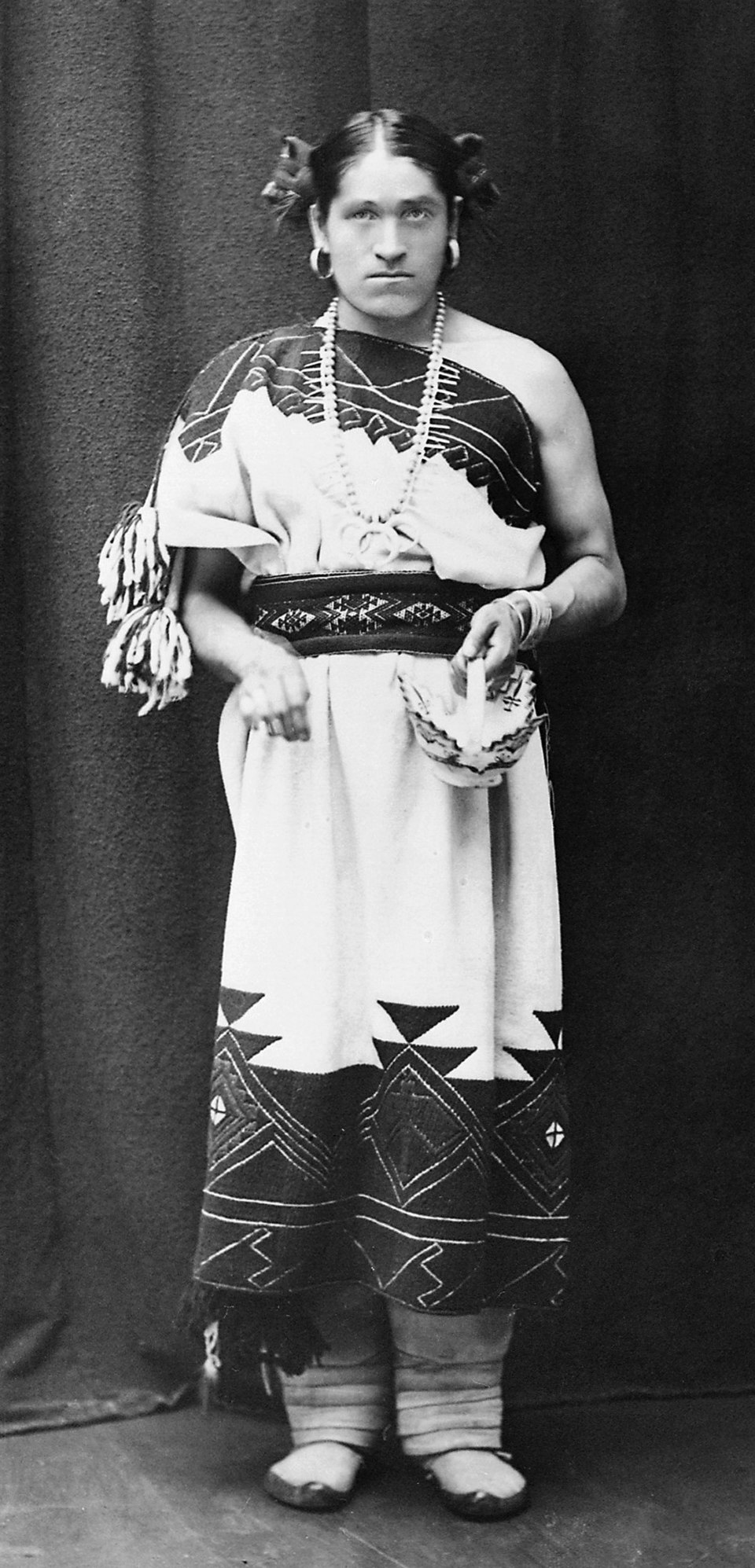
We’wha was a Zuni lhamana—a social and ceremonial role in which a person assigned male at birth lived in ways associated with both women’s and men’s work. Born around 1849 in Zuni Pueblo, western New Mexico, We’wha became known for skilled weaving, pottery, and textile work, as well as for participating in important cultural and religious activities within the community.
In 1886, We’wha travelled to Washington, D.C., as part of a Zuni delegation and met U.S. officials, providing many Americans with their first recorded encounter with a lhamana person. We’wha continued to serve as a respected cultural figure at Zuni Pueblo until her death in 1896.
According to colonial accounts of We'wha's life, in Zuni society, a lhamana is a person assigned male at birth who takes on social roles, work, dress, and responsibilities traditionally associated with women, while also participating in certain roles associated with men. Lhamana people moved between gendered spheres of labour and ceremony, and their position was recognized, named, and respected within Zuni culture.
Rather than indicating a fixed gender identity in the modern Western sense, lhamana refers to a specific cultural role, involving:
- Women’s work, such as weaving, pottery, grinding corn, and domestic tasks
- Men’s tasks, such as heavy labour and certain ceremonial duties
- Community mediation and ritual participation
The term reflects Zuni understandings of gender as socially structured and multifaceted, rather than strictly binary.
We'wha's mentions are documented in Matilda Coxe Stevenson's “The Zuni Indians: Their Mythology, Esoteric Fraternities, and Ceremonies” (1904). These descriptions range from 310-313, mentioning that "We'wha's death was regarded as a calamity (313). The Zuni Pueblo Tribal Government & Cultural Resources do not document this, and another key author of this history is Will Roscoe, who wrote The Zuni Man-Woman in 1991, focusing on We'wha's life. Roscoe's text is a historical speculation rather than a contemporary account and the author is not Zuni.

Regeneration Notes